


Edited by Martina Manocchio - Recent graduate of the Master's degree in Management and Business Consulting
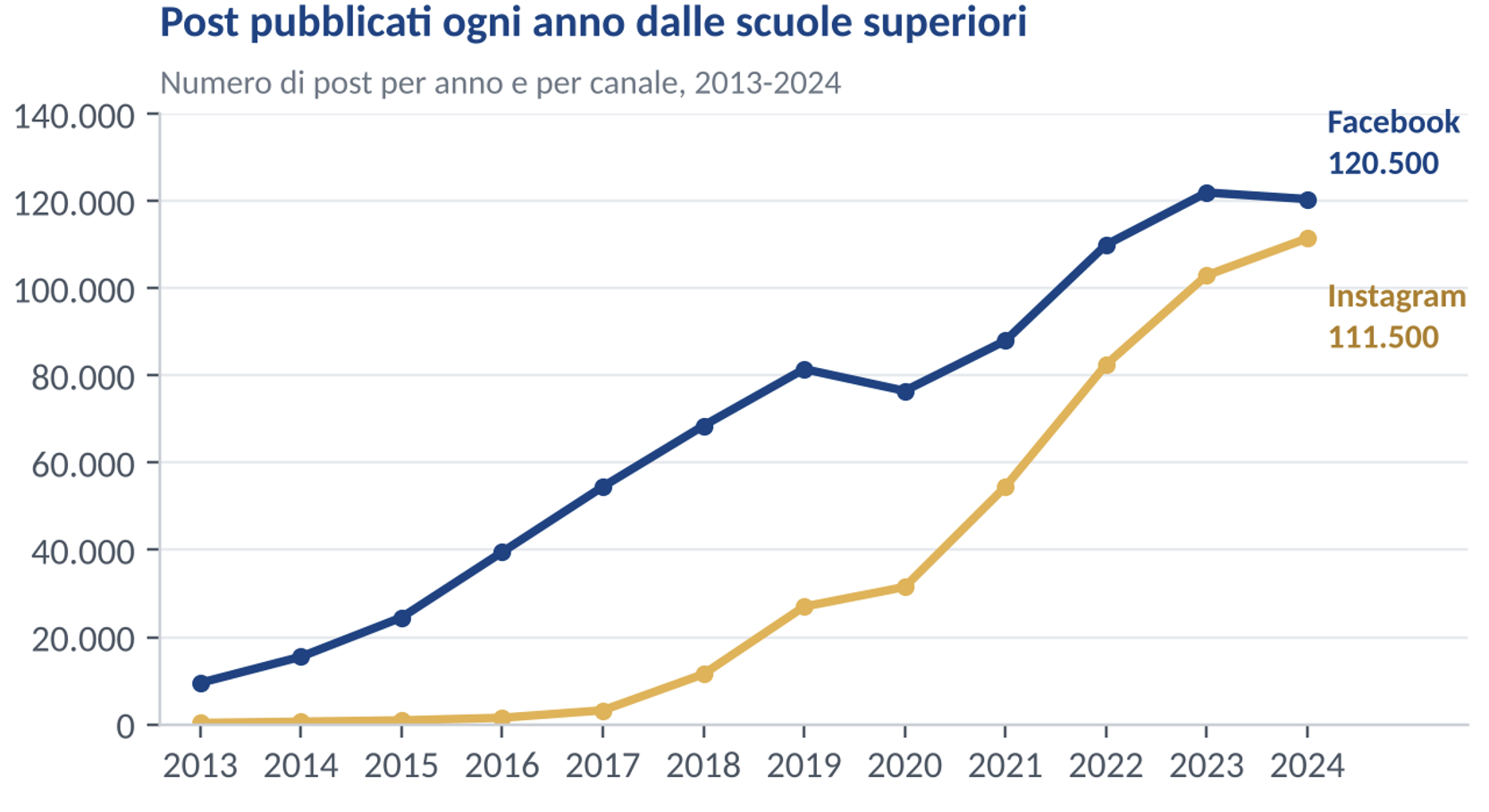
The presence of upper secondary schools on social networks has grown steadily, with the annual volume of posts published increasing about 24-fold between 2013 and 2024. This figure comes against a school landscape marked by the country's systemic demographic decline and by tight budget constraints on the education sector. The analysis of content shared online, classified with text mining algorithms into eight thematic areas (teaching, guidance, culture, citizenship, events and awards, school-work alternation, sport, European projects), reveals a structural weakness: content on school guidance, although it is the second largest by volume, receives the fewest interactions and shows the slowest growth, ending up informing users already enrolled rather than attracting new students. The data also show a weak link between communication and schools' teaching performance, as measured by INVALSI scores, which are instead strongly linked to families' socio-economic status.
The results concern a range of stakeholders: from head teachers and teachers, who manage communication on top of their ordinary duties, to families looking for reliable guidance; from local authorities, for whom schools are essential hubs of social cohesion and a bulwark against depopulation, especially in inner areas, to the central institutions responsible for sizing the school network and allocating financial resources.
The analysis of Italian state upper secondary schools examines the transformation of digital communication through a survey covering the volumes of posts published on Facebook and Instagram from 2013 to 2024. This trend is compared with the demographic evolution of enrolments and with INVALSI score data. In a country that spends 3.9% of GDP on education, compared with a European average of 4.7%, and that faces a 15.7% contraction in the student population, schools are communicating more and more, often with limited financial resources and staff and in the absence of specific regulatory guidance.
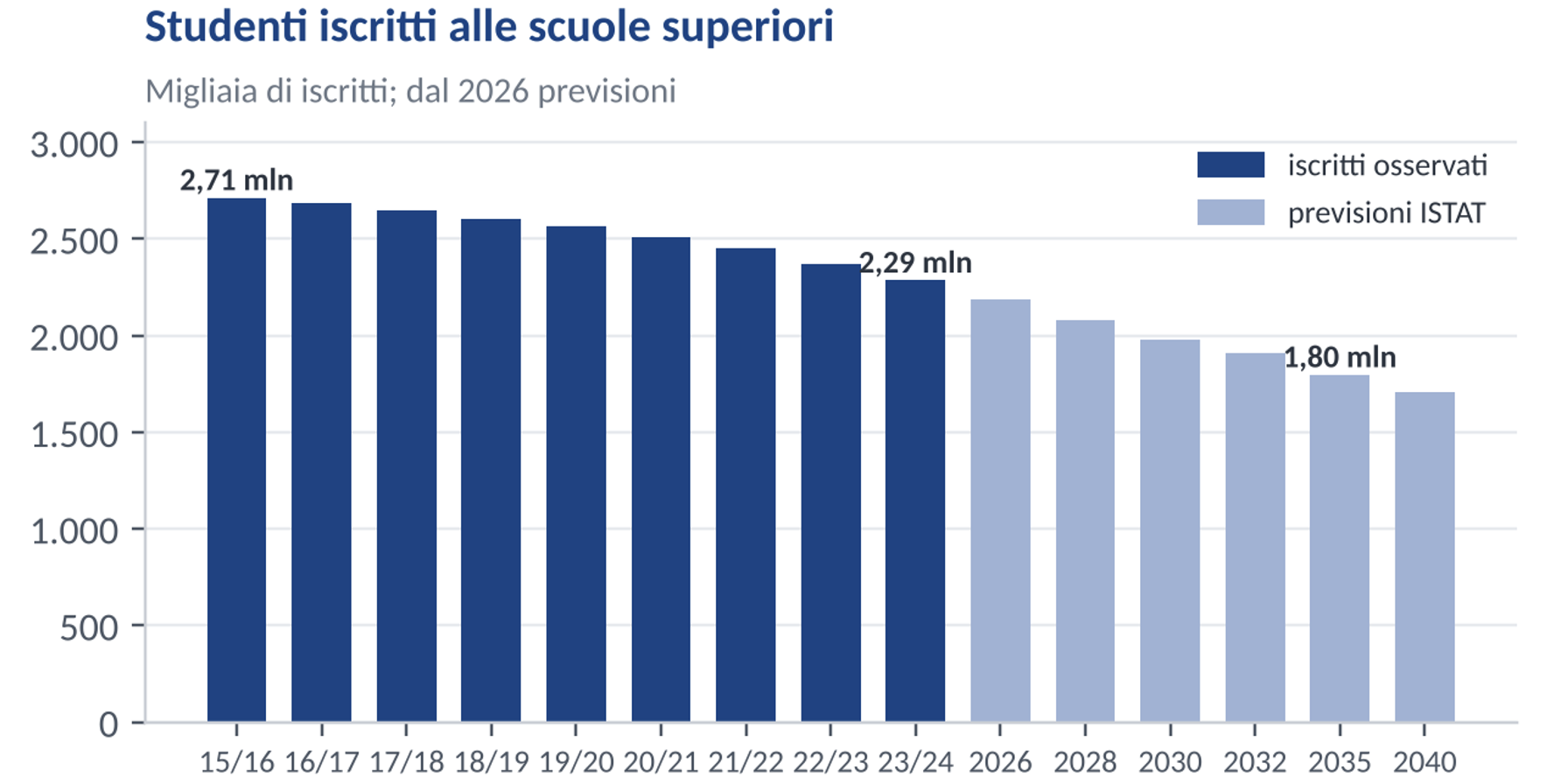
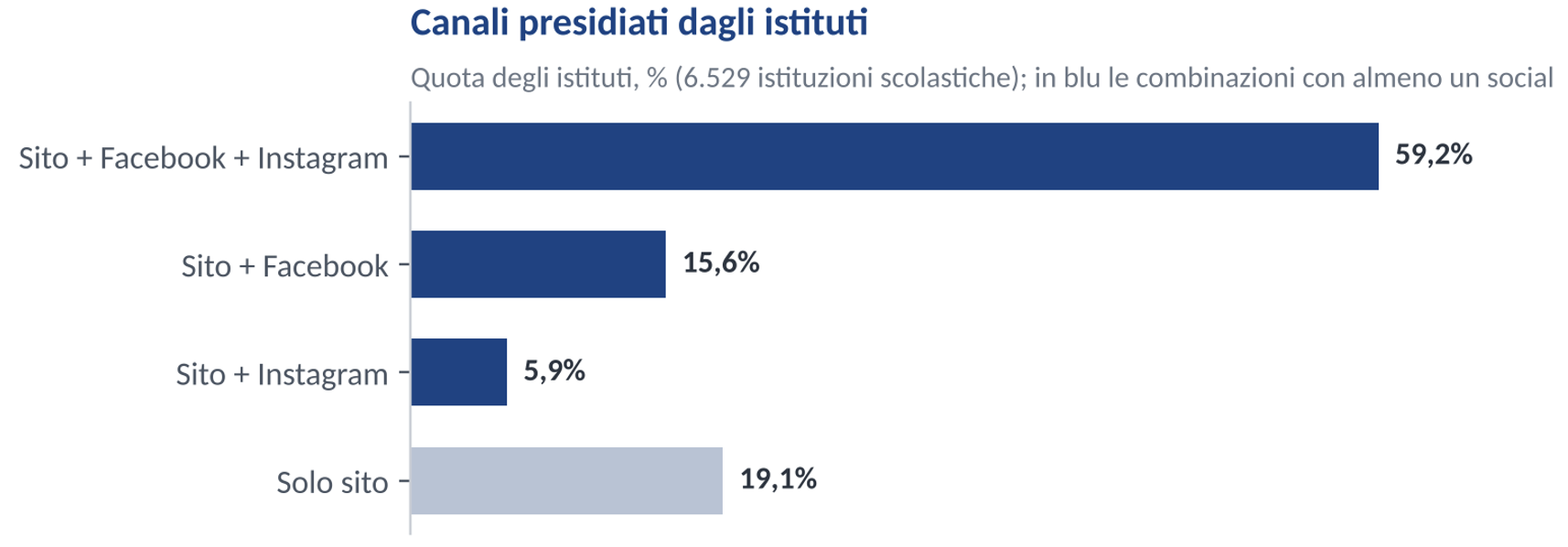
Of the 6,529 schools monitored, 80.7% choose to complement their institutional website with a presence on at least one social media platform, in most cases managing Facebook and Instagram profiles together, a combination adopted by 59.2% of schools. Overall production of digital content has grown exponentially, driven largely by the rapid spread of Instagram, which in 2024 accounted for 48% of the total volume of posts. This increase in communication activity is managed informally by head teachers and teachers on top of their ordinary duties, without dedicated staff or allocated funding.
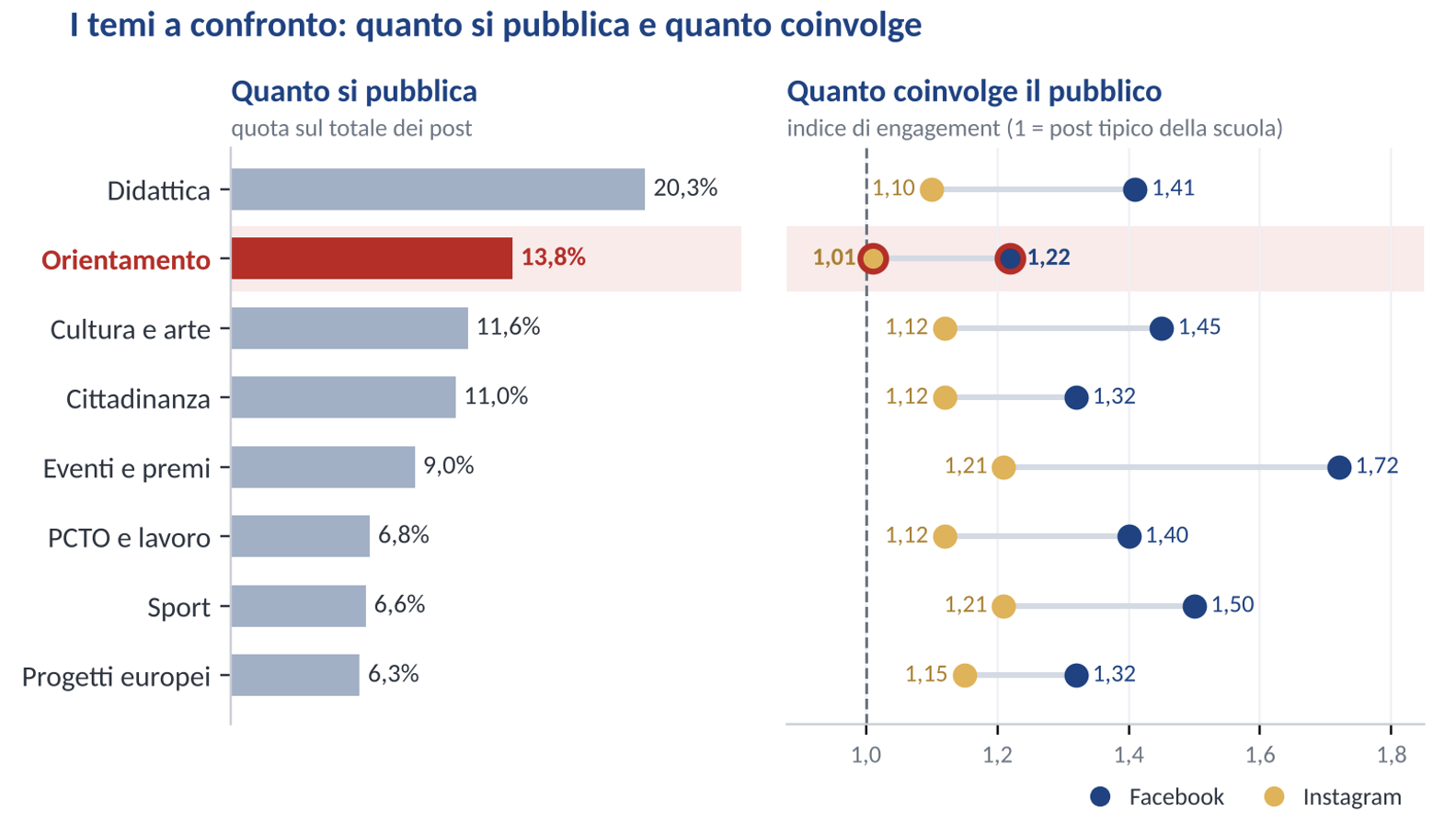
The analysis of shared content shows that teaching is the most frequently covered topic, accounting for 20.3% of all posts, followed by communications on school guidance, at 13.8%. However, measuring user interactions reveals a marked gap between the amount of content produced and the response it actually receives: the highest levels of engagement are concentrated on posts about school community life, such as cultural events, sports activities and artistic initiatives. Conversely, posts focused on school guidance record the lowest engagement on both social networks and are the topic with the slowest growth over the last decade.
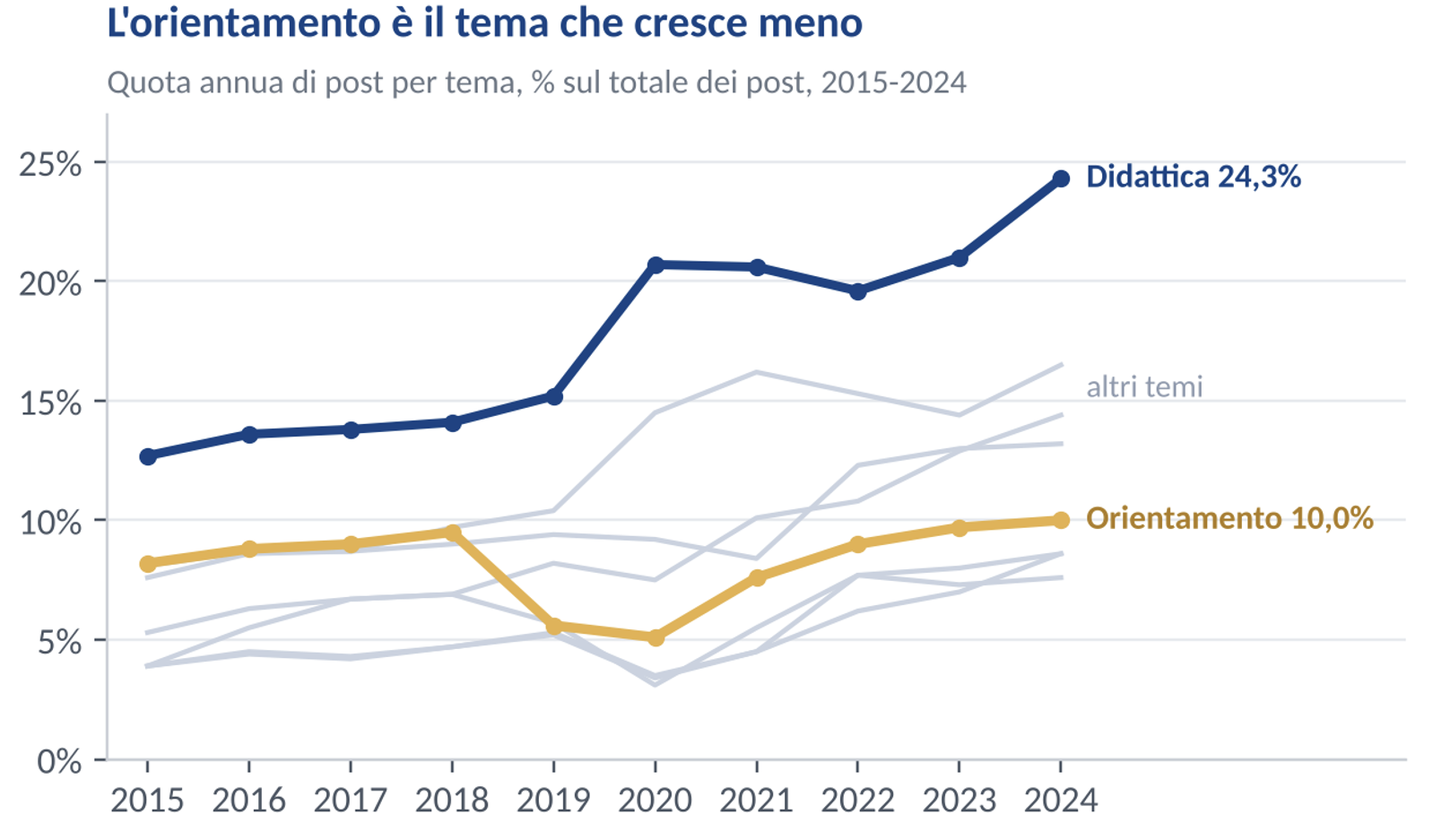
Guidance activities peak in January, when enrolment procedures open, but social media communication struggles to reach its real target audience. Thirteen-year-olds about to choose their upper secondary school do not usually follow upper secondary schools' social media channels and, together with their families, tend to rely on official ministry services such as the Piattaforma Unica and the Scuola in Chiaro portal. As a result, guidance posts published on social media end up circulating mainly among users who are already part of the school community. This paradox is even more significant in the regions of the South and Centre, where guidance communication is stepped up precisely in response to particularly sharp demographic declines in the school-age population.
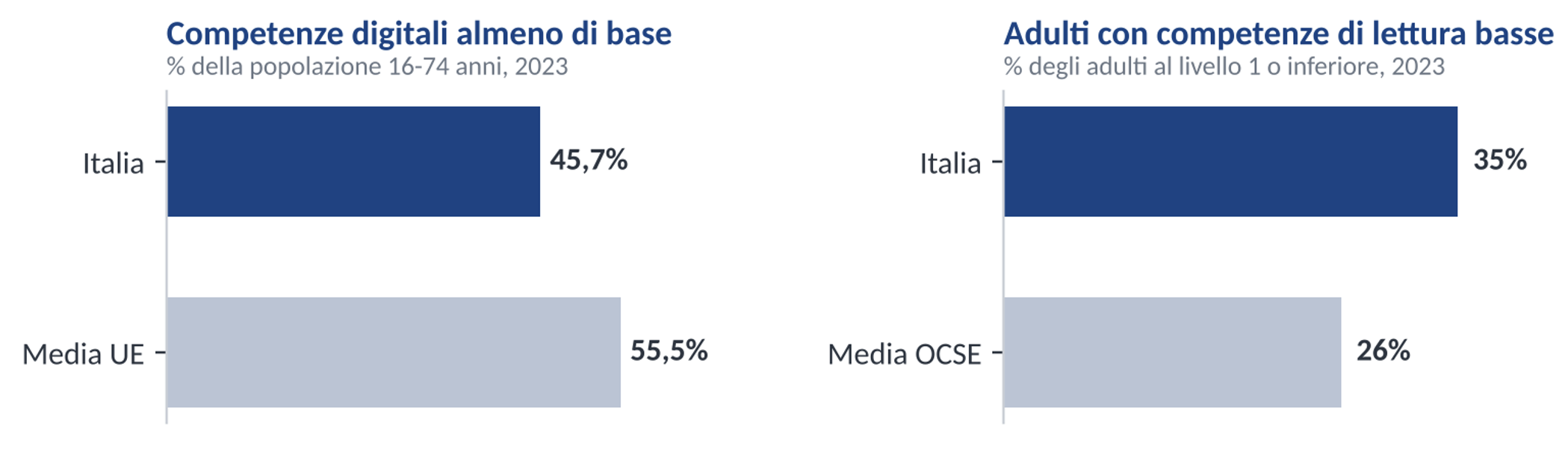
Comparing posting frequency on social media with INVALSI results between the 2018-19 and 2024-25 school years shows no stable statistical relationship between the intensity of digital communication and teaching performance as measured by INVALSI results. Test results remain instead strongly influenced by the ESCS index, the measure of families' economic, social and cultural status, which alone explains about half of the territorial differences in scores measured by the INVALSI tests. Persistent inequalities in parents' digital skills and reading comprehension also risk limiting access to school information. Communication, which could reduce gaps, thus ends up reproducing them.
The analysis examined more than 1.7 million posts published on Facebook and Instagram by Italian state upper secondary schools, classified by topic and measured by audience response, and related them to enrolments, demographic trends and regional INVALSI results. The picture that emerges is one of widespread and fast-growing communication, in which guidance takes up significant space but receives the weakest response and mainly reaches those already enrolled. INVALSI scores show no stable link with the intensity of communication and remain closely tied to families' socio-economic background. The survey data indicate that the main value of schools' presence on social networks lies in its ability to strengthen internal cohesion and the identity narrative of their community of students, families and staff, while its impact on attracting new enrolments appears marginal. Looking ahead, in the face of continuing demographic decline and shrinking public resources for education, a structural rethink of the whole sector is needed. It is a priority to formally recognise the communication function within school organisations by providing specific resources and skills. It is also necessary to develop early guidance pathways coordinated across the different institutional levels, and to promote targeted measures to support and protect disadvantaged socio-economic contexts. In this way, schools will be able to help reduce initial gaps and fully play their role as a great equalizer.
Sources
Eurostat: public expenditure on education as a percentage of GDP (2023).
Google Trends: searches for «unica iscrizione scuola superiore».
INVALSI: sample microdata from national surveys, ESCS index.
ISTAT: demographic projections; survey on new generations; Citizens and ICT 2023.
Ministry of Education and Merit: open data on enrolments (2015/16-2024/25); interministerial decree no. 124 of 30 June 2025 on the sizing of the school network.
OECD: Survey of Adult Skills (PIAAC) 2023.
Instant Analytics Srl – Data for People
Accredited spin-off of the University of Molise
Via Francesco De Sanctis, Snc - Campobasso
VAT 01949560708
info@instantanalytics.it
Privacy Policy